
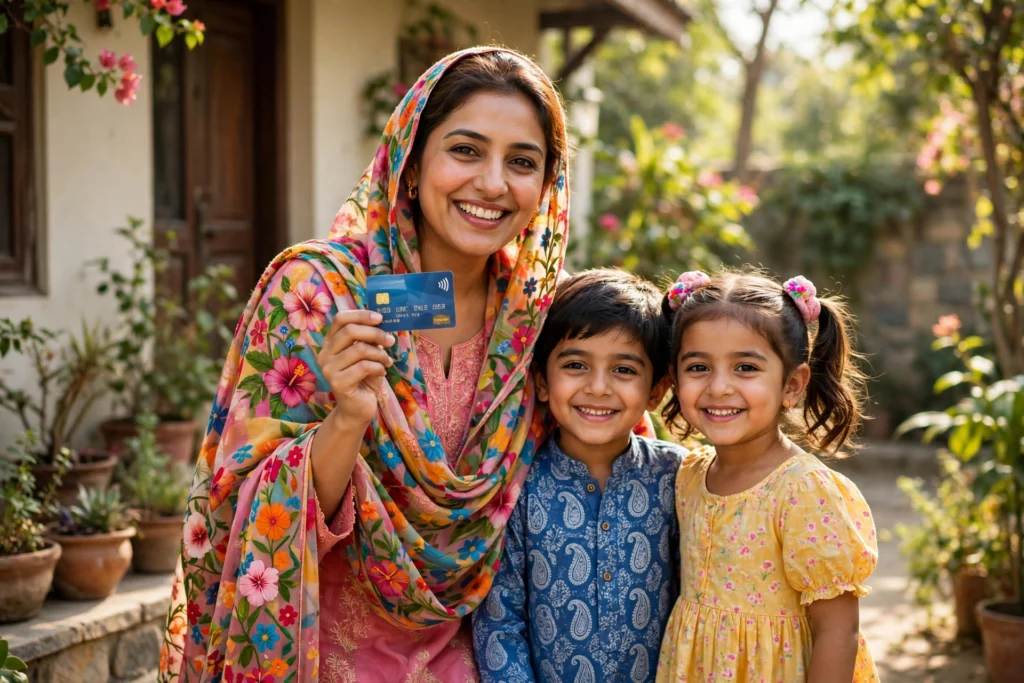
A pattern runs through Pakistan’s best-designed welfare: pay the woman. BISP Kafaalat puts Rs 14,500 a quarter in the mother’s hands, not the household’s loudest voice. Punjab’s Dhee Rani Program gives the bride herself a Rs 200,000 salami on her own ATM card alongside a dowry package and a dignified collective wedding. Benazir Nashonuma routes food and cash through mothers in a child’s first two years, and Benazir Taleemi Wazaif pays more for daughters than sons at every class, with a bonus when a girl finishes primary school. This page gathers the four schemes designed around women and the family, what each pays, and the conditions that decide them.
The Schemes at a Glance
| Scheme | For whom | What it gives | Door |
|---|---|---|---|
| BISP Kafaalat | Women of poor households | Rs 14,500 per quarter | NSER survey via BISP offices |
| Punjab Dhee Rani Program | Brides 18 to 40 in the priority categories | Rs 200,000 salami + dowry package of about Rs 206,000 + ceremony | cmp.punjab.gov.pk or district Social Welfare offices |
| Benazir Nashonuma | BISP mothers, children under 2 | Quarterly stipends + specialised food + checkups | Nashonuma Facilitation Centres |
| Benazir Taleemi Wazaif | Daughters (and sons) of BISP families, Class 1 to 12 | Quarterly stipends, girls paid more, Rs 3,000 primary-completion bonus for girls | Enrolment through BISP |
BISP Kafaalat: The Mother Is the Beneficiary
The design choice that made BISP different is printed on every payment: the woman receives it. Eligibility comes from the NSER survey (PMT cut-off 32, or 37 with a disabled member), registration runs through tehsil offices with the woman’s own CNIC, and the same beneficiary status unlocks the two child-focused programmes below. Re-survey every three years keeps the list honest. Our BISP guide gives documents and payment-collection detail.
Dhee Rani: A Wedding Without Debt
For a poor family a daughter’s wedding is often the largest debt of a lifetime. Dhee Rani replaces it: a collective ceremony arranged by Punjab’s Social Welfare Department, a dowry package of household essentials worth about Rs 206,000, and Rs 200,000 cash to the bride’s own Bank of Punjab card, for brides aged 18 to 40 who are destitute, orphaned, disabled or the daughters of disabled parents, around 5,000 a year. Our Dhee Rani guide covers the affidavit, the balloting when applications exceed places, and the helpline 1312.
Nashonuma and Taleemi: The Child Years
Nashonuma guards the first 1,000 days: quarterly stipends (from April 2026, Rs 2,500 for the mother, Rs 2,500 per boy, Rs 3,000 per girl) plus specialised food and checkups at facilitation centres in hospitals, for Kafaalat families only. Taleemi Wazaif then carries schooling: quarterly stipends from Class 1 to 12 that rise by level and pay girls more, tied to 70% attendance, with a Rs 3,000 bonus when a daughter completes primary school. Our Nashonuma guide and Taleemi Wazaif guide give enrolment steps and current rates.
A Family’s Order of Operations
- First, the mother’s BISP status: it is the key that opens Kafaalat, Nashonuma and Taleemi together. Check it on 8171.
- A wedding approaching in Punjab: apply to Dhee Rani early in your district’s round; places are balloted when demand exceeds supply.
- A baby on the way in a BISP family: enrol at the Nashonuma centre at your hospital visits, with CNIC, B-Form plans and immunisation card in order.
- Keep the woman’s CNIC, the children’s B-Forms and school attendance records current; every scheme on this page reads them.
Women and Family Schemes: FAQs
By design: Kafaalat names the woman as beneficiary so the quarterly Rs 14,500 reaches the family’s daily needs directly, and her beneficiary status also enrols her children in Nashonuma and Taleemi Wazaif.
Rs 200,000 salami on her own Bank of Punjab ATM card, a dowry package worth about Rs 206,000, and the collective wedding ceremony with food arranged by the department. Nothing is repaid.
Unmarried women aged 18 to 40 with Punjab domicile who are destitute, orphaned, persons with disabilities or daughters of persons with disabilities, with a settled proposal and an affidavit of unmarried status.
Quarterly stipends (Rs 2,500 for the mother, Rs 2,500 per boy and Rs 3,000 per girl under two, from April 2026) plus specialised nutritious food and health checkups at Nashonuma Facilitation Centres.
Yes, at every level girls are paid more than boys, and a daughter who completes primary school receives a one-time Rs 3,000 bonus. Attendance of 70% is the condition.
No. BISP enrolment, Dhee Rani application and the Nashonuma and Taleemi registrations are all free. Anyone charging is a fraud; the Social Welfare helpline is 1312 and BISP’s is 0800-26477.
Taken together, these four schemes reward the same habits: keep the mother’s record current, keep school and health visits regular, and apply early when a life event is coming. A family that already holds Kafaalat status should check, at each hospital visit and at school enrolment, whether Nashonuma or Taleemi has been added, because those additions are often missed when a form is left half finished. A family planning a wedding should start the Dhee Rani file before the date is fixed, so the affidavit, domicile and proposal papers are ready when the district round opens. In every case, keep copies of the CNIC, B-Forms, attendance slips and any receipt or message from an office, and never pay an agent who promises faster approval, because enrolment in these schemes is free. If a payment is late, a name is missing, or a helpline answer is unclear, return to the office that holds the record with the same documents, ask for the reason in writing where possible, and try the official helpline again. The amounts on this page will change over time, so check the linked guides before applying, and use this page as a map, not as a substitute for the current official notice. That simple discipline, one record at a time, is what turns a scheme on paper into support in hand.
Last updated: November 4, 2026