Benazir Nashonuma is BISP’s nutrition programme for the first 1,000 days of a child’s life. If you receive Benazir Kafaalat and you are pregnant, breastfeeding, or have a child under two, Nashonuma adds a quarterly stipend of Rs 2,500 for you, Rs 2,500 for a baby boy and Rs 3,000 for a baby girl, plus specialised nutritious food and health checkups at Nashonuma centres, free. This page explains who qualifies, what you receive at the centre, and how to enrol. For treatment cover at hospitals, see our Sehat Sahulat page as well.
Quick Facts
| Fact | Detail |
|---|---|
| Programme | Benazir Nashonuma, under BISP |
| For | Kafaalat mothers who are pregnant or breastfeeding, and their children under 2 |
| Stipend | Rs 2,500 per quarter for the mother; Rs 2,500 for a boy under 2; Rs 3,000 for a girl under 2 |
| Plus | Specialised nutritious food, health checkups and awareness sessions at centres |
| Enrolment | In person at Nashonuma Facilitation Centres in DHQ and THQ hospitals |
| Centres | More than 500 centres across all districts |
| Cost | Completely free |
What Is the Benazir Nashonuma Programme?
Nashonuma exists to fight stunting: when a mother and baby do not get enough nutrition in pregnancy and the first two years, the child’s growth and learning suffer for life. The programme combines three things: a quarterly cash stipend, specialised nutritious food for the mother and child, and regular health contact, including checkups, immunisation follow-up and awareness sessions on feeding and hygiene. In July 2026, BISP and its partners, including the World Food Programme, UNICEF and WHO, announced a three-year extension of the programme, expanding its reach from 4.7 million people towards 8 million.
How Much Does Nashonuma Pay?
BISP raised Nashonuma stipends by Rs 500 in April 2026, alongside the Kafaalat increase. The current quarterly amounts are:
| Beneficiary | Stipend per quarter |
|---|---|
| Pregnant or breastfeeding mother | Rs 2,500 |
| Boy child under 2 years | Rs 2,500 |
| Girl child under 2 years | Rs 3,000 |
These amounts are on top of the mother’s regular Kafaalat payment, not instead of it. A mother with a baby girl can receive Rs 5,500 per quarter from Nashonuma alone. Support for a child stops when the child turns two.
Who Can Enrol in Nashonuma?
- You must be an active BISP Kafaalat beneficiary. Nashonuma is an add-on to Kafaalat, so families outside Kafaalat cannot join directly.
- You are pregnant, or breastfeeding a child under two, or your child is under two years old (under 23 months at registration).
- You register in person at a Nashonuma Facilitation Centre. There is no online registration.
If you are not yet a Kafaalat beneficiary but your household may qualify, complete the free NSER survey first, as explained on our BISP page.
How to Register at a Nashonuma Centre
- Confirm your Kafaalat status by sending your CNIC to 8171.
- Find your nearest Nashonuma Facilitation Centre. Centres sit inside District Headquarters (DHQ) and Tehsil Headquarters (THQ) hospitals; the BISP helpline 0800-26477 can confirm the closest one.
- Take your original CNIC, your child’s B-Form, and the child’s immunisation card.
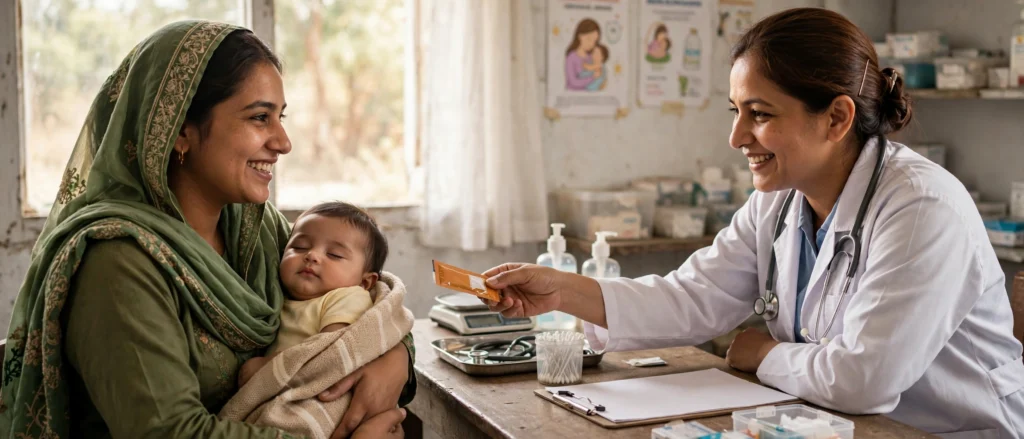
- At the centre, staff register you, check the health status of mother and child, and explain the visit schedule.
- Attend the scheduled sessions and checkups. The stipend is conditional on these visits, because the programme’s purpose is health contact, not only cash.
Registration and every service at the centre are free. The programme also runs a public dashboard of its centres and coverage on its official website.
What Happens at Nashonuma Centre Visits?
At visits, staff record the child’s weight and growth, check the mother’s health, provide the specialised nutritious food for the coming period, and run short awareness sessions on breastfeeding, weaning foods, hygiene and immunisation. Keeping these appointments is what keeps your stipend flowing: missed checkups can pause the quarterly payment until you re-engage with the centre. If you move to another district, tell both centres so your record transfers instead of lapsing.
Benazir Nashonuma: FAQs
Rs 2,500 for a pregnant or breastfeeding mother, Rs 2,500 for a boy under two, and Rs 3,000 for a girl under two. These amounts apply since the increase of April 2026 and are paid on top of the mother’s Kafaalat payment.
No. Nashonuma is only for families already receiving Benazir Kafaalat. If your household may qualify for Kafaalat, complete the free NSER survey at your BISP tehsil office first.
At a Nashonuma Facilitation Centre, which are located inside DHQ and THQ hospitals. Take your CNIC, your child’s B-Form and the immunisation card. Registration is in person only and completely free.
Until the child turns two years old. The programme covers pregnancy and the child’s first 1,000 days, which is the period that matters most for preventing stunting.
Usually because a scheduled centre visit or checkup was missed, since the stipend is conditional on health visits. Visit your centre to re-engage, and check your Kafaalat status on 8171 as well.
Yes. The specialised nutritious food, checkups and sessions at Nashonuma centres are free for enrolled beneficiaries. Anyone charging for them is committing fraud.
If you are already receiving Kafaalat and are expecting a baby or caring for a young child, a short visit to your nearest centre is the simplest next step. Take your documents, ask staff about your visit schedule, and keep your checkups up to date so your support continues without a break. Check your nearest DHQ or THQ hospital first, keep your CNIC, B-Form and immunisation card ready, and ask centre staff to confirm your next visit date before you leave. Regular visits help staff track growth, answer feeding questions and keep your quarterly support on schedule for your family. If you are unsure whether your nearest centre offers Nashonuma, call the BISP helpline on 0800-26477 for guidance before travelling. Early enrolment gives your child the best start in the first 1,000 days.
Keep exploring: Health Schemes · Women and Family Schemes · All Government Schemes
Last updated: November 4, 2026.