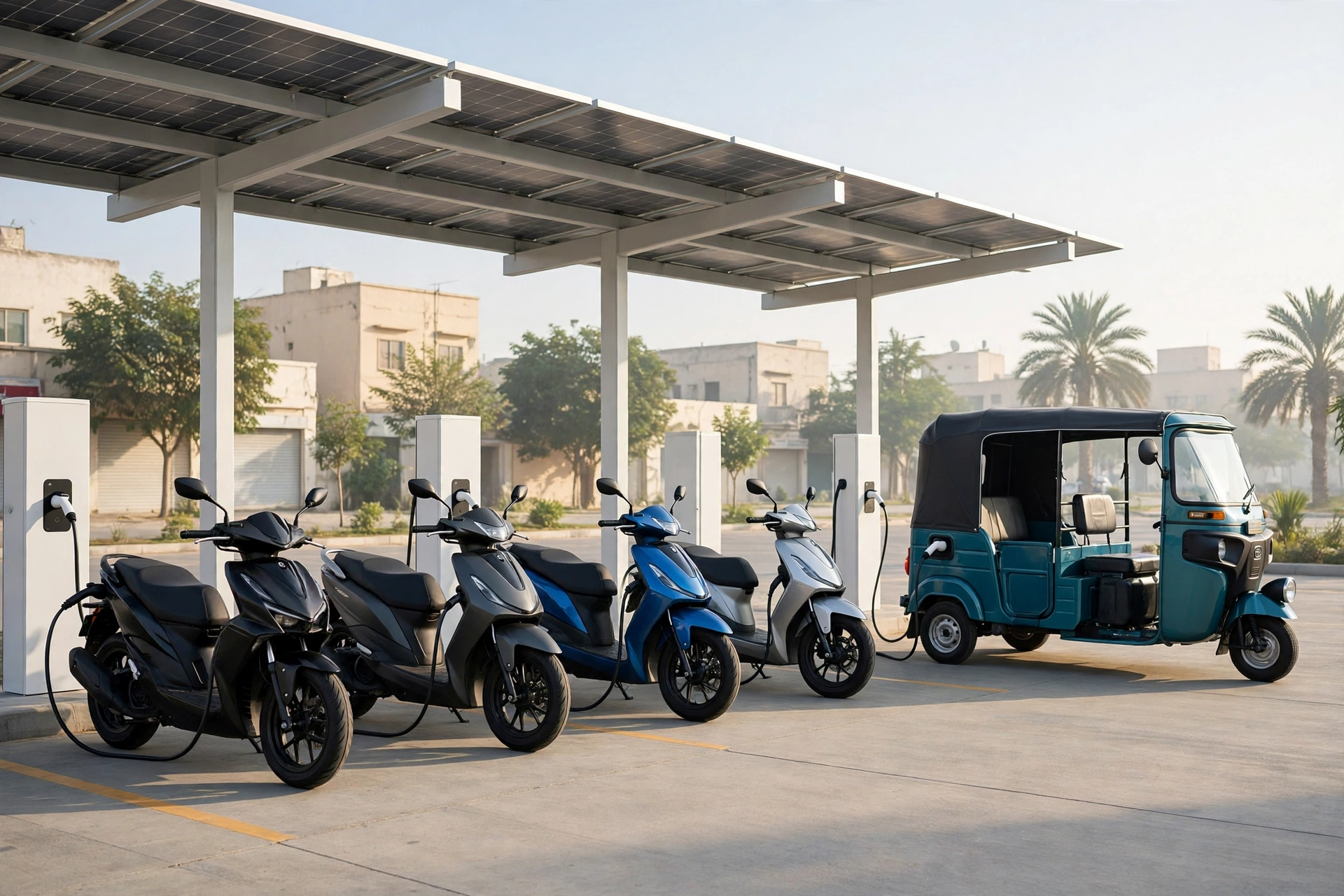
The PM Electric Bike Scheme is the federal subsidy and interest-free loan programme for electric bikes, rickshaws and loaders, delivered through PAVE, the Pakistan Accelerated Vehicle Electrification programme. It is open to Pakistanis across the country, not just students, applications were handled through the official platform pave.gov.pk, and only approved models in the PAVE catalogue qualify. This guide sits inside our Solar and Energy Schemes hub and our Federal Schemes collection, and it explains the subsidy amounts in each phase, how the interest-free loan worked, who can apply and how the scheme differs from the Punjab-only student scheme.
The scheme runs under the National Electric Vehicle (NEV) Policy 2025-30, launched in June 2025, which targets 30 percent of new vehicle sales being electric by 2030. PAVE is the delivery programme built to put that policy on the road, starting with the two-wheelers and three-wheelers most Pakistanis actually buy. For the financial year 2025-26, the government set aside an envelope of Rs 9 billion covering about 116,053 electric bikes and 3,171 electric rickshaws and loaders, with 25 percent of the subsidy reserved for women.
| Item | Detail |
|---|---|
| Programme | PM Electric Bike Scheme, delivered through PAVE (Pakistan Accelerated Vehicle Electrification) |
| Policy | National Electric Vehicle (NEV) Policy 2025-30, launched June 2025 |
| FY2025-26 envelope | Rs 9 billion for about 116,053 electric bikes and 3,171 rickshaws and loaders |
| Women | 25 percent of the subsidy reserved for women |
| Phase 1 loan | Interest-free (government bears the full markup); Rs 200,000 for an e-bike, Rs 880,000 for a rickshaw or loader |
| Phase 1 capital subsidy | Up to Rs 50,000 per e-bike; up to Rs 200,000 per rickshaw or loader |
| Phase 2 subsidy | Rs 80,000 per electric motorcycle and up to Rs 400,000 per rickshaw or loader, paid at the point of sale |
| Who can apply | All Pakistanis; not limited to students |
| Applications | Through the official platform pave.gov.pk; approved catalogue models only |
PM Electric Bike Scheme Subsidy Amount: Phase 1 vs Phase 2
The subsidy has been delivered two different ways, and mixing them up is the most common source of confusion about this scheme. In Phase 1, the support came as a capital subsidy alongside a bank loan: up to Rs 50,000 per electric bike and up to Rs 200,000 per rickshaw or loader, under the State Bank’s cost-sharing framework reported in September 2025. The subsidy reduced what the buyer had to finance, and the loan covered the rest.
Phase 2, approved in May 2026, changed the machinery. The subsidy moved to the point of sale: the buyer pays the reduced price at purchase, and the Engineering Development Board reimburses the manufacturer instead of the buyer chasing money afterwards. The reported Phase 2 amounts are higher: Rs 80,000 per electric motorcycle and up to Rs 400,000 per rickshaw or loader, with allocation on a first-come-first-served basis instead of balloting, and a target of about 119,170 vehicles. When you see Rs 80,000 quoted for this scheme, that is the Phase 2 point-of-sale figure, not the Phase 1 capital subsidy.
PAVE Interest-Free Loan: Loan Size, Equity and Repayment
In Phase 1, the financing was structured so the end user paid no markup at all. Banks charged financing at a market-based rate, but the federal government bore the full markup, which made the loan interest-free for the borrower. The loan size was Rs 200,000 for an electric bike and Rs 880,000 for an electric rickshaw or loader, and the borrower contributed 20 percent equity. Repayment ran up to 2 years for bikes and up to 3 years for rickshaws and loaders.
Phase 1 covered 40,000 electric bikes and 1,000 rickshaws and loaders, the first slice of the 2025-26 envelope. The design explains the scheme’s logic: the capital subsidy cut the price, the 20 percent equity kept the buyer’s own stake in the purchase, and the government-paid markup removed the interest cost that usually makes instalment buying expensive for low-income riders, delivery workers and rickshaw drivers.
Who Can Apply for the PM Electric Bike Scheme
Unlike the better-known provincial scheme, the PAVE programme is not a student scheme. It is open to Pakistanis generally: commuters, delivery riders, working women, rickshaw and loader drivers, and anyone else buying an approved electric two-wheeler or three-wheeler for ordinary use. The 25 percent reservation of the subsidy for women is built into the programme’s design, reflecting how much of the target market is women who ride for work, study and family transport.
The real eligibility gate is the vehicle, not the person. Only approved electric bike, rickshaw and loader models listed in the PAVE catalogue qualify for the subsidy and financing. A privately sourced bike, an unlisted model or a petrol vehicle bought with the intention of converting it does not qualify, no matter who the buyer is.
How to Apply on pave.gov.pk and Which Bikes Qualify
Applications were handled through the programme’s digital platform, pave.gov.pk, which managed application, verification and subsidy processing. The practical steps for a buyer are to choose a model from the approved PAVE catalogue, apply through the official platform or the channel the current phase specifies, complete verification, and then complete the purchase under that phase’s rules: a bank-financed purchase with capital subsidy in Phase 1 terms, or a point-of-sale subsidised price in Phase 2 terms.
One warning matters more than any other on this page: never pay an agent. This scheme has attracted middlemen promising to secure a subsidised bike for a fee. The subsidy is the government’s money delivered through official channels only, either through the financing bank or as a point-of-sale reduction reimbursed to the manufacturer. Anyone asking for cash to arrange your PAVE subsidy is running a fraud, and an application made outside the official platform will not be fixed by paying them.
PAVE Delivery Progress: Why Phase 1 Was Slow
Honest reporting on this scheme has to include its weak first chapter. Delivery in Phase 1 was slow: an Economic Coordination Committee review in May 2026 was reported to note about 5,409 vehicles delivered against about 269,149 applications received. Demand, in other words, was never the problem; the bank-mediated machinery moved far more slowly than the applications piled up.
Phase 2 was designed as the answer to that failure. Moving the subsidy to the point of sale removes the buyer from the reimbursement chain, replacing balloting with first-come-first-served allocation removes the wait for a draw, and reimbursing the manufacturer through the Engineering Development Board makes the subsidy visible in the showroom price itself. The Phase 2 target of about 119,170 vehicles keeps the programme at roughly the same overall scale as the original 2025-26 envelope.
PM Electric Bike Scheme vs Punjab E-Bike Scheme: What Is the Difference
Pakistan now has two electric bike schemes with similar names, and they are easy to confuse. The PM Electric Bike Scheme on this page is federal: it covers the whole country, it is open to all Pakistanis, and it subsidises rickshaws and loaders as well as bikes. The Punjab E-Bike Scheme is a provincial programme for students in Punjab institutions, with its own subsidy and instalment structure and its own application window.
If you are a student studying in Punjab, read the Punjab guide as well, because you may fit that scheme’s rules more directly. If you are not a student, or you live outside Punjab, or you drive a rickshaw or loader for a living, the federal PAVE scheme is the one written for you. The two schemes are separate programmes with separate money, so an application to one is never an application to the other.
PM Electric Bike Scheme FAQs
It is the federal government’s subsidy and financing programme for electric bikes, rickshaws and loaders, delivered through PAVE, the Pakistan Accelerated Vehicle Electrification programme, under the National Electric Vehicle Policy 2025-30. The 2025-26 envelope was Rs 9 billion for about 116,053 electric bikes and 3,171 rickshaws and loaders, with 25 percent of the subsidy reserved for women.
It depends on the phase. In Phase 1 the capital subsidy was up to Rs 50,000 per electric bike and up to Rs 200,000 per rickshaw or loader, alongside an interest-free loan. In Phase 2, approved in May 2026, the subsidy moved to the point of sale at Rs 80,000 per electric motorcycle and up to Rs 400,000 per rickshaw or loader, reimbursed to the manufacturer by the Engineering Development Board.
In Phase 1, yes, for the borrower. Under the State Bank cost-sharing framework reported in September 2025, banks charged a market-based financing rate but the federal government bore the full markup, so the end user paid zero markup. The loan was Rs 200,000 for an e-bike and Rs 880,000 for a rickshaw or loader, with 20 percent borrower equity and repayment up to 2 years for bikes and 3 years for rickshaws and loaders.
All Pakistanis can apply; the scheme is not limited to students. It covers buyers of approved electric bikes, rickshaws and loaders across the country, and 25 percent of the subsidy is reserved for women. The vehicle must be an approved model in the PAVE catalogue; unlisted or privately sourced vehicles do not qualify.
The PM scheme is federal and nationwide, open to everyone, and includes rickshaws and loaders. The Punjab E-Bike Scheme is a provincial programme for students in Punjab only, with its own subsidy, instalments and application window. They are separate programmes: applying to one does not count as applying to the other.
Applications were handled through the official digital platform pave.gov.pk. Only approved models listed in the PAVE catalogue qualify for the subsidy. Apply only through official channels, and never pay an agent who promises to arrange your subsidy for a fee: that is a fraud, because the subsidy is delivered through the bank or at the point of sale, never through middlemen.
Keep exploring: Solar and Energy Schemes · Federal Schemes · All Government Schemes
Last updated: November 4, 2026